

How to Edit Photos & Use an AI Image Generator
Learn how to edit photos and create stunning AI images in 2026. From basic photo editing to AI image generators, this guide covers tools, tips, and prompts.
image for illustrative purpose
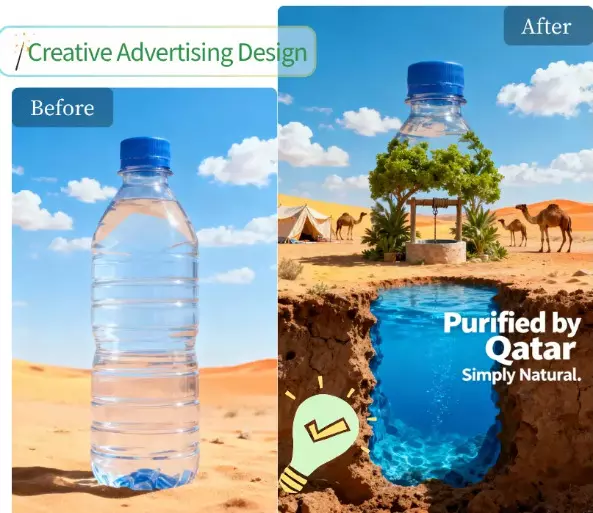
Sick of spending hours in attempts to get your photos right? You're not alone. The professional appearance or building a special image in general was once a complicated and time-consuming process. Modern and potent devices have enabled them to realize their creative dream easier than ever, be it in enhancing a portrait or creating an entire new world out of a mere text document.
This tutorial is going to take you through the tricks and required methods to edit pictures in 2026 and demonstrate how you can use the force of AI to make a stunning image. We will discuss the simplest of improvements to the amazing frontier of AI-generated images, and we will concentrate on the most effective tools to accomplish the task.
Your Go-To Toolkit for Effortless Image Creation
Before diving into specific techniques, it’s important to have the right software. While the market is full of options, a new generation of integrated platforms simplifies the entire process. These tools combine user-friendly design with powerful capabilities, making them ideal for both beginners and seasoned pros.
1. The Premier Choice for Smart Photo Enhancement
The most effective place to begin to improve your images is one that knows what you want to achieve. The latest software takes care of the most annoying aspects of editing, such as deleting the stuff you do not want or changing the light, thus allowing creativity. A modern AI photo editor provides a full range of options in which any small fixes to intricate manipulations can be performed in a few clicks. It is meant to be your one stop shop towards making every photo look good without having to spend months learning how to use it.
2. The Top Tool for Bringing Ideas to Life
But what should you do when the picture you require is not there? It is here that AI generation enter into play. You now have the option of creating fully original images depending on what you have to say, instead of having to search the stock photos. The most excellent AI image generator will turn your text requests into stunning images of high quality, drawings, and photoreal paintings. The capabilities of this technology are limitlessly creative: you could create a bespoke visual image in seconds whether it is social media, marketing content or a personal project.
Foundational Photo Editing Techniques for 2026
Even with the rise of AI, understanding the fundamentals of photo editing is still valuable. These core skills give you more control over the final result and help you make more informed decisions when using automated tools.
Cropping and Composition
It is common to polish writing as the initial editing process. The composition is strong and the eye of the viewer follows it and removes any distraction.
* Rule of 3: The photo looks like it has a 3x3 grid. By having important elements on such lines or at cross points, the image can be more balanced and interesting. To assist with this purpose, most editing tools have a grid overlay.
* Horizontals Straighten: An overlying horizon is distracting. Straighten or rotate is a tool used to make sure that there is a perfect alignment between the horizontal lines (such as the horizon) and the vertical lines (such as the buildings).
* Cut out unnecessary things in your frame: This includes any distractions you have on the sides of your frame that do not contribute to your story. This aids in making the protagonist stand out.
Color Correction and Grading
The influence of color in a photograph on the mood and quality is colossal. Color correction is accurate and color grading is about a certain artistic style.
White Balance: under this option you make white things in your photograph to look white. When the image has a blue (cool) or yellow (warm) hue, the white balance should be changed to make the colors appear more natural. The majority of editors have an auto mode or a dropper instrument where you are able to choose a neutral gray or white space.
Hue, Saturation, and Luminance (HSL): Choose these sliders and have a fine control over single colors.
* Hue: Color one a certain color to be (e.g. turn a green to a teal).
- Saturation: Desaturates or saturates a color. Make colors stand out by increasing it or make it less striking by minimizing it.
Luminance- This is the brightness of a color. It is possible to make the blues brighter in a sky without interfering with the rest of the picture.
Exposure and Contrast Adjustments
The lighting is an important factor in achieving a good photo. Exposure is the general brightness of an image whereas contrast is the difference between the dark and bright areas.
* Brightness/Exposure: This is the first slider that you should make changes in case your photo is too dark or too light.
Contrast: Adding contrast causes the darks to become darker and the lights to become lighter which may provide punch to a flat image. Never do too much of it, though you may lose details in the shadows or in the highlights.
Highlights and Shadows: these are more focused controls. In case there is a dull sky, you can reduce the highlights to restore the detail. In the event that the face of your subject is too opaque, you are able to increase the shadows to render it more noticeable without sacrificing the rest of the picture.
e.
Advanced Editing with AI: A Step-by-Step Guide
AI-powered tools have made advanced editing techniques accessible to everyone. What once required specialized skills can now be done in seconds.
One-Click Fixes and Auto-Enhancements
The majority of the modern editors have a button called auto or enhancement. It is an analysis feature that uses what it deems to be the most desirable adjustments in exposure, color, and sharpness to your photo automatically. It is a good place to start and particularly when you are new to editing. The auto-fix can be utilized and afterwards I can work on the specific settings.
Object Removal and Background Replacement
Going to have a great shot and have a distracting background or an object in the way? AI makes this an easy fix.
1. Choose the Object Removal Tool: This can also be referred to as a healing brush, clone stamp or just remove.
2. Paint Over the Objectionable Object: Just paint over the person, garbage bin or electrical cable you wish to dispose.
3. Make AI Work: The software will smartly analyze the rest of the pixels around the spot selected and fill it in, so that the object disappears without a trace.
A background change is equally a simple procedure. The majority of the tools will identify the primary subject, and with the press of a button, one can cut it out and place it on a fresh background.
How to Use an AI Image Generator Effectively
Creating images from text is a powerful new skill. The quality of your results depends almost entirely on the quality of your instructions, or "prompts."
Writing Effective Prompts
A prompt is the text description you give the AI. The more detailed and specific you are, the better the result will be.
* Be Descriptive: Don't just say "a dog." Say "a photorealistic golden retriever puppy sitting in a field of daisies during a golden sunset, soft lighting."
* Include Style Cues: Specify the style you want. Examples include "digital art," "Studio Ghibli style," "cinematic photograph," "3D render," or "watercolor painting."
* Mention Technical Details: You can include camera and lens specifics to guide the output, like "shot on a 35mm lens, f/1.8, cinematic lighting."
* Use Negative Prompts: Many tools allow you to specify what you *don't* want to see. For example, you might add "--no blurry, --no text" to avoid those elements.
Iterating and Refining Your Creations
Your first result might not be perfect, and that's okay. The creative process with AI is about iteration.
* Tweak Your Prompt: If the image isn't quite right, slightly change your prompt. Add more detail, change the style, or rephrase your description.
* Generate Variations: Most AI generators can create several variations of the same prompt. This allows you to pick the one that best matches your vision.
* Use Image-to-Image: Some generators let you upload an existing image as a reference along with your prompt. This helps the AI create a new image that is structurally or stylistically similar to your reference.
Conclusion: Create Better Images, Faster
Digital imagery is a fast changing world. It is no longer a niche skill to know how to edit them and use AI to make new photos, it is a creative advantage. Learning the basics of editing and learning how to work and write the correct prompts, you will be able to create works of art as far as the visuals are concerned.
It has also eliminated the technical barrier with the ability to obtain potent creativity tools through the fingertips with modern tools. Be it in improving a family picture, marketing materials or simply trying your imagination the appropriate software can make it easy, quick and enjoyable.





